BigGreenBear.com
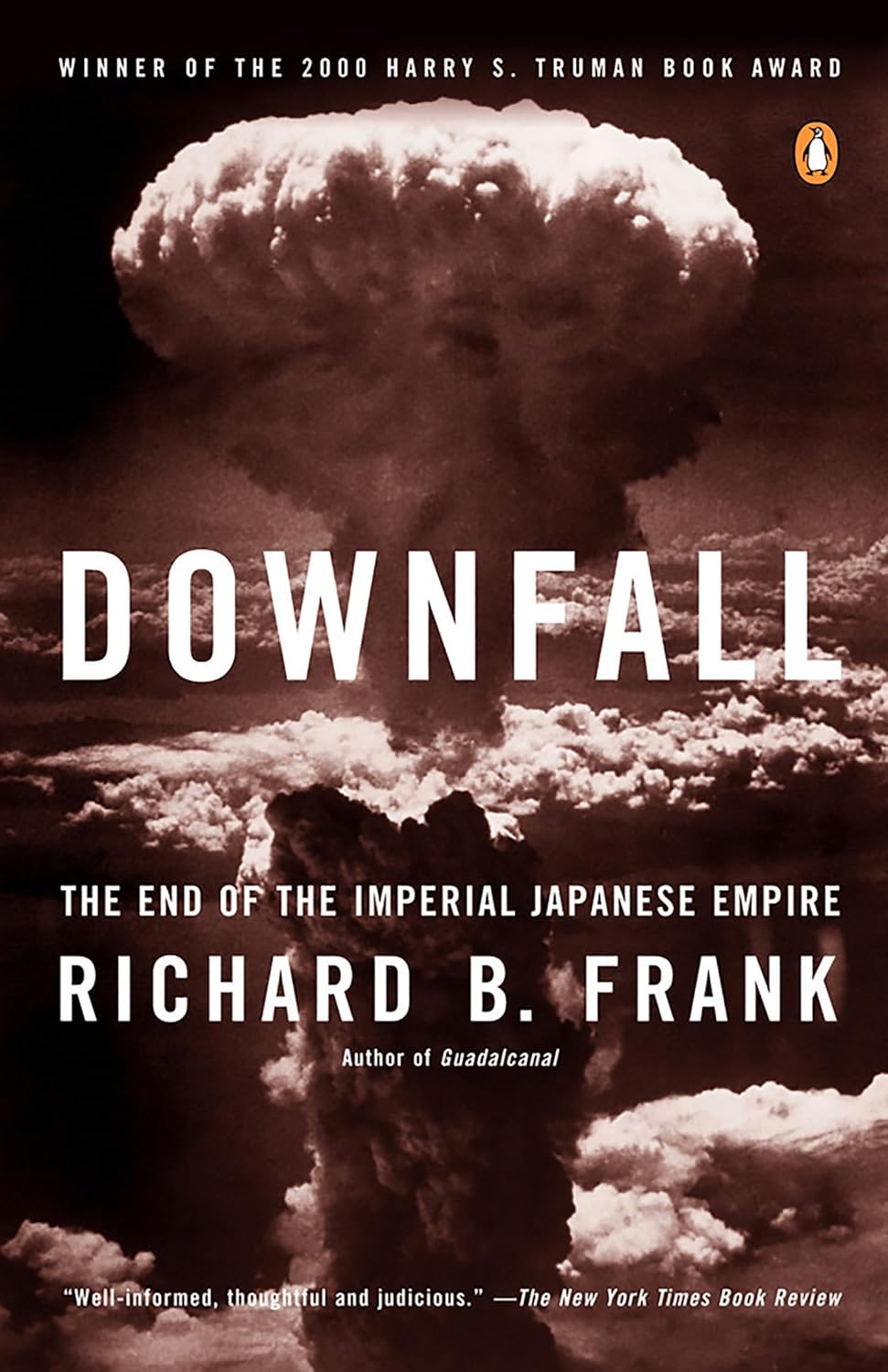
Downfall: The End of the Imperial Japanese Empire
Downfall: The End of the Imperial Japanese Empire
Couldn't load pickup availability
WINNER OF THE HARRY S. TRUMAN BOOK AWARD • A deeply researched analysis of the last months of World War II and the fall of Japan
In a riveting narrative that includes information from declassified documents, acclaimed historian Richard B. Frank gives a scrupulously detailed explanation of the critical months leading up to the dropping of the atomic bomb. Frank explains how American leaders learned in the summer of 1945 that their alternate strategy to end the war by invasion had been shattered by the massive Japanese buildup on Kyushu, and that intercepted diplomatic documents also revealed the dismal prospects of negotiation.
Here also, for the first time, is a comprehensive account of how Japan's leaders were willing to risk complete annihilation to preserve the nation's existing order. Frank's comprehensive account demolishes long-standing myths with the stark realities of this great historical controversy.
Review
"Brilliant . . . an enormous work based on the most meticulous research. Here is everything you might want to know about Guadalcanal."
--Los Angeles Times Book Review
"Richard Frank has produced what will surely become the standard history of the U.S. Navy's most important campaign. . . . A stunning debut by a major new talent in American letters."
--Tom Clancy
"Guadalcanal is a masterly account of what happened and why. . . . Books of this quality are rare, and Richard B. Frank should be commended for his authoritative inaugural work."
--Chicago Tribune
"Mr. Frank's book is impressive in virtually all respects--a vividly and carefully crafted monument that is worthy of the Americans and Japanese who collided . . . on a little-known island named Guadalcanal."
--The New York Times Book Review
From the Back Cover
America's use of the atom bomb has generated more heated controversy than any other event of the whole war:
-- Did nuclear weapons save the lives of hundreds of thousands of Americans poised to invade Japan.?
-- Did U.S. leaders know that Japan was urgently seeking peace and needed only assurance about the Emperor's safety to end the war swiftly?
-- Was the bomb really used to intimidate the Russians?
-- Why wasn't the devastating power of the weapon demonstrated first before being unleashed on a city?
Richard B. Frank has brought to life these critical times, working from primary documents, reports, diaries, and newly declassified records. These pages present the untold story of how American leaders learned in the summer of 1945 that their compromise strategy to end the war by blockade and bombardment, followed by invasion, had been shattered; radio intelligence had unmasked a massive Japanese buildup on Kyushu designed to turn the initial invasion into a bloody shambles. Meanwhile, the text and analysis of diplomatic intercepts depicted sterile prospects for negotiation before a final clash of arms. Here also, for the first time, is a full and balanced account of how Japan's leaders risked annihilation by gambling on a military strategy aimed at securing political bargaining leverage to preserve the old order in Japan.
Downfall replacesthe myths that now surround the end of the war and the use of the bomb with the stark realities of this great historical controversy.
About the Author
- Publisher : Penguin Books
- Publication date : May 1, 2001
- Edition : Reissue
- Language : English
- Print length : 512 pages
- ISBN-10 : 0141001461
- ISBN-13 : 978-0141001463
- Item Weight : 1 pounds
- Reading age : 18 years and up
- Dimensions : 8.43 x 5.5 x 1.14 inches
- Grade level : 12 and up
Multiple items can be sent combine in one order.
Save on shipping costs when you order multiple items at once from Add to Cart!
-
Book grading is based on a score out of 10:
0-1.5 = poor to good minus
2.0-3.5 = fair to very good minus
4.0-5.5 = very good to fine minus
6.0-7.5 = fine to very fine minus
8.0 = very fine
8.5 = very fine plus
9.0 = very fine/near mint
9.2 = near mint minus
9.4 = near mint
9.6 = near mint plus
9.8 = near mint to mint
9.9 = mint
10.0 = gem mint Fast secure shipping ·
 Shipping from United States
FAST SHIPPING for all domestic orders with no extra charge for shipping regardless if you buy 1 or 100+ items. We commit to process 99.99% of orders within three business day upon receipt of confirmed payment. Delivery time may vary based on several factors, but in general you should get your item within 2-8 days in the US, and International items vary greatly on your countries postal system and customs processing times.
Return Policy
All Books that are sold on BigGreenBear.com can be returned. Returns are only accepted if the item is not as described or damaged. If you are making a return, please initiate the return process through BigGreenBear.com
Prior to listing, our expert team carefully assessed this item to represent it accurately.
Please review the description and high-definition images prior to purchasing to ensure this item meets your satisfaction. We welcome you to contact us if you have further questions about this item.